Finding Your Ground: The Mindfulness Practice That Helps You Come Back to Yourself.
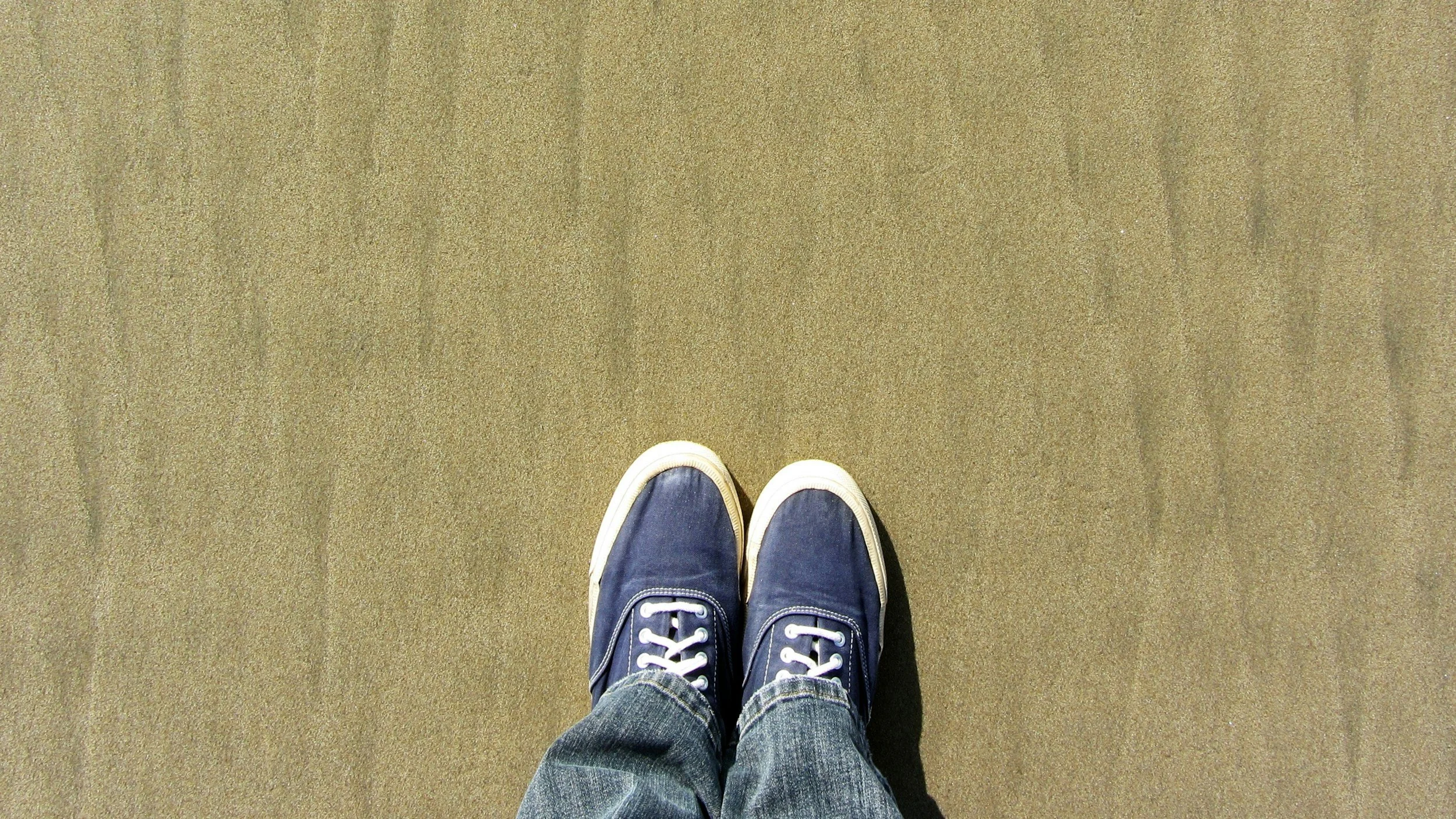
In this month’s blog exploring the book and course “Deeper Mindfulness” by Mark Williams and Danny Penman, we focus on how to find our ground, by returning, again and again, to the raw, physical reality of the present moment.
The Mind Is Always Predicting
One of the most fascinating ideas that underpins deeper mindfulness practices is the brain’s constant attempt to predict reality.
The authors describe the famous “cocktail-party effect”: you’re surrounded by noise at a crowded gathering, yet somehow your attention instantly snaps toward someone saying your name across the room. Your brain was already monitoring the environment in the background, scanning for what matters.
According to Penman and Williams, this is how the mind operates all the time. It continuously compares its predictions about the world with incoming sensory information, searching for “prediction errors” that signal something important has changed.
This ability keeps us safe. But it also creates a subtle problem.
Much of the time, we stop experiencing life directly and instead live inside mental simulations: assumptions, habits, worries, memories, expectations. We eat without tasting. Walk without noticing. Listen without hearing. The mind becomes a kind of autopilot theatre, endlessly replaying old scripts.
It leads to the quiet gradual fading of ordinary wonder. The only time we notice reality is when it lets us down - when we trip on a kerb or bump into a door. The prediction error leads to an update and hopefully a correction but sometimes it can get stuck on emphasising what might go wrong.
“The Message Is in the Error.”
Mindfulness, the authors suggest, is not about escaping reality but rediscovering it.
When we slow down and fully pay attention to sensory experience, we begin noticing the tiny differences between what the mind expects and what is actually happening. Those differences are alive with detail: the warmth of sunlight on skin, the texture of a cup in your hand, the complexity of a single breath.
Reality turns out to be richer than the simulation.
This is where mindfulness stops sounding like self-help and starts feeling almost poetic. The authors argue that joy itself often hides inside these overlooked moments of direct experience.
Instead of trying to enhance or maxxlife, we are invited to notice and participate in the life already happening; our life already happening.
Why We Need an Anchor
Traditionally, mindfulness meditation uses the breath as the focal point for attention. But Deeper Mindfulness expands this approach, recognizing that many people struggle to stay connected to the breath, especially when anxious, overwhelmed, or emotionally flooded.
Instead, the authors encourage experimenting with multiple anchors:
The feet touching the floor
The hands resting together
The sensation of sitting
Sounds in the environment
The breath
The metaphor they use is elegant: the mind is like a drifting boat, and attention needs an anchor to keep it from floating endlessly out to sea.
What matters is not choosing the “correct” anchor. What matters is discovering what genuinely helps you feel grounded.
That flexibility feels refreshingly humane. There is no rigid spiritual performance here. No gold star for meditating “properly.” Only curiosity.
The Real Practice Is Returning
Distraction is not failure.
The mind wanders. Constantly.
But every moment of noticing that wandering is itself the practice.
This reframing is quietly radical. Many people abandon meditation because they assume a busy mind means they are doing it badly. Penman and Williams dismantle that myth entirely. The act of returning attention, gently and repeatedly, is how mindfulness is built.
Like strengthening a muscle through repetition.
Or teaching a puppy where home is.
Again. And again. And again.
The “Soles of the Feet” Meditation
One particularly practical tool introduced is the “Soles of the Feet” meditation, described as a six-second stress reliever.
When anxiety spikes or emotions become overwhelming, the instruction is startlingly simple:
Take a slow breath.
Drop attention into the feet.
Notice physical sensations: pressure, warmth, tingling, contact with the ground.
Why does this help?
Because it shifts the mind from what the authors call Driven Mode into Being Mode.
Driven Mode is the problem-solving mind: endlessly rehearsing the future and revisiting the past. Useful in many situations, but exhausting when it becomes nonstop.
Being Mode reconnects us with direct sensory experience, which can only happen in the present moment.
The shift is less like “solving” anxiety and more like stepping off a mental treadmill that never realized it could stop.
Mindfulness Is Not Always Comfortable
Penman and Williams openly acknowledge that mindfulness can sometimes feel difficult, especially for people carrying trauma, anxiety, or emotional pain. Meditation may occasionally surface uncomfortable memories or emotions. In rare cases, practicing too intensely can even become destabilizing.
Rather than presenting mindfulness as a magical cure-all, Penman and Williams emphasize pacing, gentleness, and self-compassion.
This feels especially important in today’s culture, where wellness practices are often marketed as endlessly soothing and uncomplicated.
The authors instead offer something more mature:
Mindfulness is not about forcing yourself to endure pain heroically. It is about learning when to stay present with difficulty and when to step back kindly.
That distinction between willingness and capacity is one of the wisest insights in the whole approach.
Finding Ground in Everyday Life
Grounding isn’t confined to formal practice:
It can help us notice and then interrupt the habit of doom-scrolling social media. Grounding can help us feel “safe” for the first time in years simply by reconnecting with bodily sensations during moments of emotional overwhelm.
Mindfulness is not trying to eliminate thoughts, emotions, or stress. It is helping us become less trapped inside them.
The goal is not to become a perfectly calm person floating serenely above life’s chaos like some candle-scented monk hologram.
It is to become more human. More awake. More connected.
What the offer is…
An invitation to pause.
To notice.
To reconnect with the body.
To trust that stability can be rediscovered, even in difficult moments.
And perhaps most importantly, it reminds us that grounding ourselves does not require extraordinary effort.
Sometimes it begins with something as ordinary as noticing your feet on the floor.
Tiny. Concrete. Real.
A small doorway back into your life.